
The public scandals and internal disagreements engulfing the Labour Party provide an all-pervasive soundtrack to life in Britain today. But it's not just the governing party that is stuck in a quagmire of its own making. The Conservatives face an existential crisis, too. With a much-reduced presence in the House of Commons, collapsing poll ratings, and, most recently, a string of high-profile defections to Nigel Farage’s populist challenger Reform UK, the future of the “natural party of government” now seems in doubt.
To appreciate just how momentous the Conservative Party’s reversal of fortunes has been, consider some history. Formed in 1834 with direct roots in the Tory Party, which originated in the late 1670s, the Conservative and Unionist Party (its full title) is arguably the oldest continuously active political party in the world. Home to notable prime ministers such as Winston Churchill, Margaret Thatcher, Robert Peel, and Stanley Baldwin, the Conservative Party was, until recently, synonymous with the British establishment.
Finally, a reason to check your email.
Sign up for our free newsletter today.
No political party survives for more than two centuries without a capacity for reinvention. Thatcher’s free-market economics and individualism stood in stark contrast with Benjamin Disraeli’s paternalistic, “one nation” social reforms. Edward Heath (1970–1974) took Britain into the European Economic Community (EEC); Boris Johnson (2019–2022) brought us out.
All this shapeshifting makes it hard to match up the beliefs of even the most celebrated Conservative leaders with an enduring philosophy of Conservatism. Both Roger Scruton and Michael Oakeshott, for example, emphasized the importance of tradition and continuity over radical change, and civil society over the machinations of the state. The Conservative, Scruton writes, knows that “we have collectively inherited good things” that “are easily destroyed, but not easily created.”
This view sits uneasily alongside the reality of the Conservative Party of the past half-century, which moved from Margaret Thatcher’s economic disruption to Boris Johnson’s social liberalism. From 2010 onward, the rhetoric of “austerity” masked an increase in state expenditure on health, education, and overseas aid.
It also left the doors of key institutions open to “woke” values. Theresa May tied the U.K. to a legally binding target of net-zero greenhouse gas emissions by 2050 and initiated plans to make it easier for people to change gender; Boris Johnson was responsible for the biggest immigration wave since records began.
Ultimately, the factors that made the Conservatives electorally successful for almost 200 years proved the party’s undoing. A coalition consisting of European Union leavers and remainers, traditionalists and woke radicals, free marketeers and lovers of state handouts (especially after Covid hit), became far too broad. In 2024, the party that talked “right” but governed “left,” and that promised to take back control of the borders but instead opened them, found itself firmly rejected by the electorate.
Following defeat under Rishi Sunak, Conservative leadership fell to Kemi Badenoch. In contrast with many of her predecessors, Badenoch has a strong commitment to Conservative values. She has promised to stem the tide of immigration, get real on the net-zero emissions target, and ban medical gender transition for children. In surveys of the general public, Badenoch’s personal approval ratings well exceed those of both Labour leader Keir Starmer and Reform’s Nigel Farage. What’s more, Badenoch has shown the ability to skewer Starmer in the weekly Prime Minister’s Questions.

Yet this all seems too little, too late. The Conservative electoral defeat in 2024 means that Badenoch leads a much-reduced cohort of MPs. In a different political era, she might have been successful. And not only have voters grown disillusioned with the Conservative Party as a whole—for the first time in two centuries, right-leaning voters have a credible alternative.
Reform UK, the insurgent populist party, is not tied down by historical baggage or outdated labels. It is socially conservative, anti-woke, and poses a radical challenge to the status quo. It celebrates neither capitalism nor unlimited government handouts.
In promising to put an end to mass migration, Reform recognizes that Britain is not an airport departure lounge but home to millions. Farage speaks of fairness, and of supporting citizens who have paid taxes and play by the rules, rather than those who have just arrived. As a result, his party enjoys the backing of a majority of working-class voters and consistently tops opinion polls.
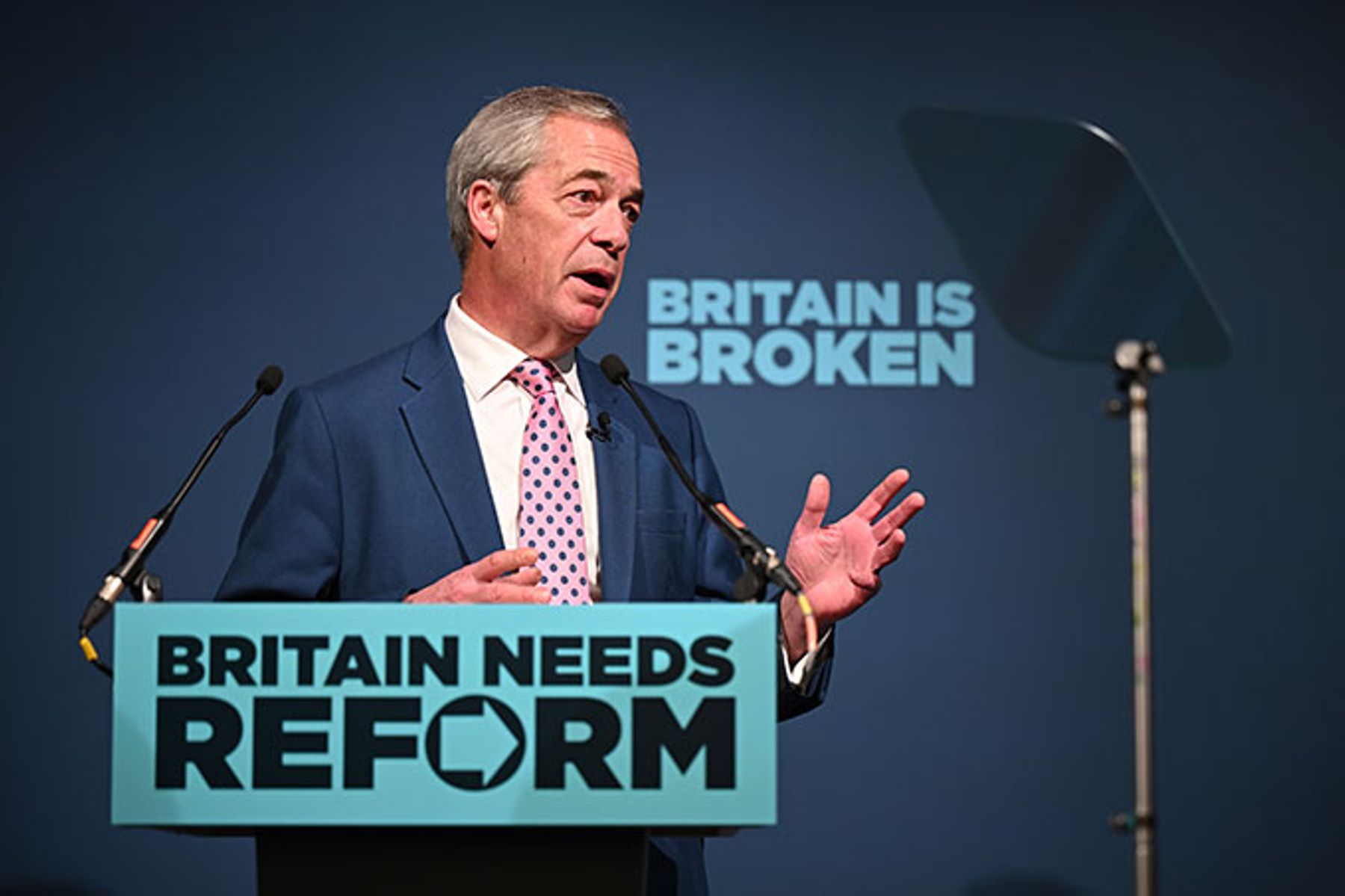
Which brings us to the Conservative defections. As the political dynamism in the U.K. shifts more decisively toward Reform, it is perhaps unsurprising that ambitious Conservatives are jumping ship. A growing number of local councilors have taken the plunge, as have current and former Members of Parliament.
In September last year, Danny Kruger became the first sitting Conservative MP to defect to Reform. His departure came as a blow because Kruger had gained a reputation for his moral and intellectual contributions to debates on the future direction of Conservatism. Tellingly, in announcing his defection Kruger said:
The Conservative Party is over, over as a national party, over as the principal opposition to the Left. But I am not despondent because conservatism is not over. It’s never been needed more. And actually, it’s never been more vibrant. Because the failure of the Conservative Party has created space for an alternative. The flame is passing from one torch to another.
Following Kruger was Nadhim Zahawi, a Conservative MP for more than a decade who also spent five years as a government minister, including a stint as Chancellor of the Exchequer. Then came Robert Jenrick, Badenoch’s one-time rival for leadership of the Conservative Party, who had become a shadow cabinet colleague. Younger than Zahawi, Jenrick has won fans through his social media posts.
Perhaps the biggest departure so far has been Suella Braverman, another past leadership contender and Home Secretary in Rishi Sunak’s administration. She joins Andrea Jenkyns, Conservative MP until 2024 and now mayor of Greater Lincolnshire, and Nadine Dorries, a cabinet minister under Boris Johnson who defected to Reform last September.
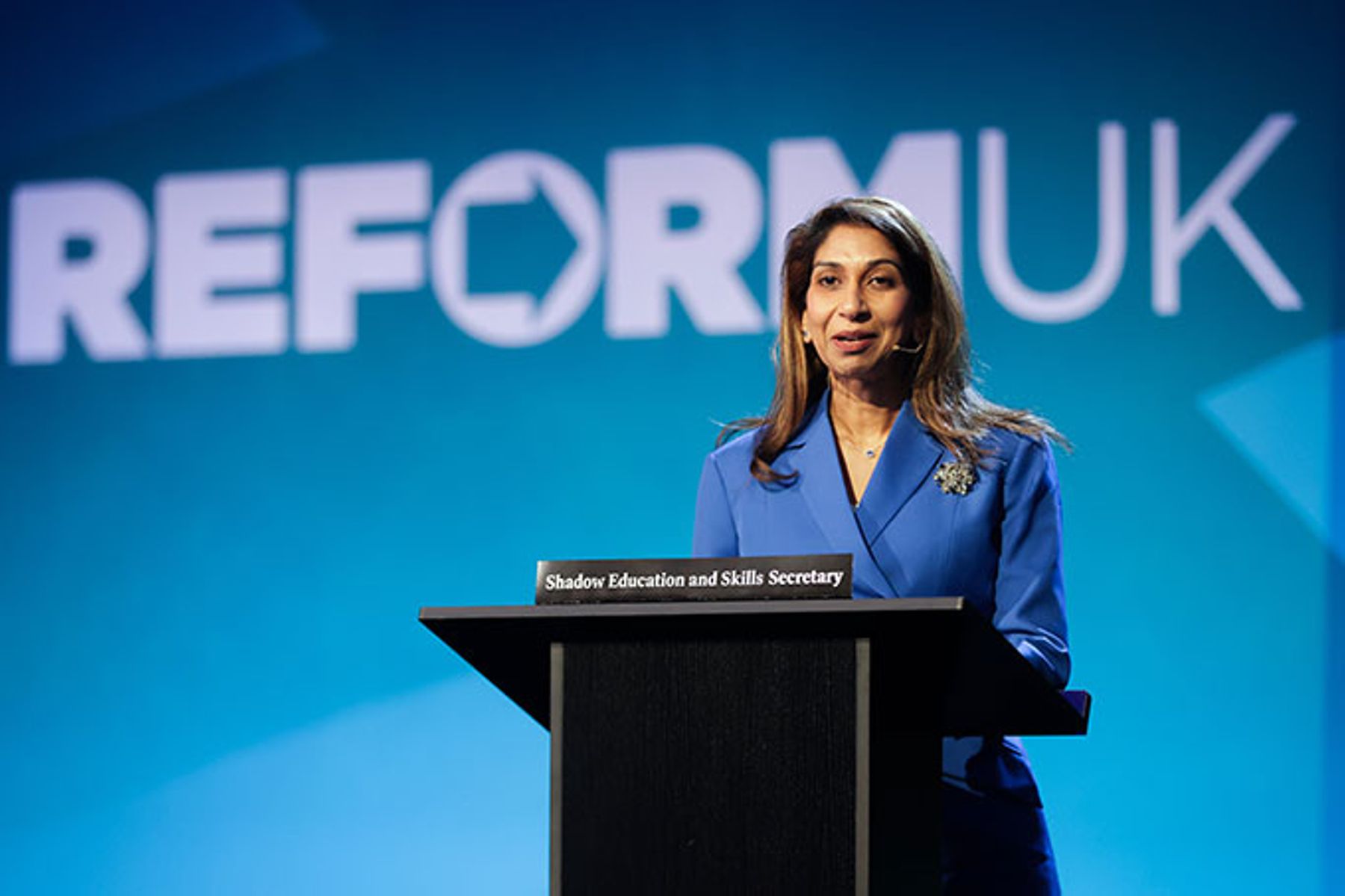
It’s easy to see why these onetime Conservatives are making the switch. Reform is more dynamic, and it offers converts better job prospects.
Welcoming defectors offers advantages for Reform. The upstart party gains not just publicity but also governing expertise. Of course, there are risks, too. It’s hard to pose credibly as a newcomer if people see your MPs as failed Tories fleeing a moribund party.
Where does all this leave the British public?
U.K. politicians of all stripes have failed their constituents in recent years. The latest opinion polls suggest a huge mismatch between voters’ preferences and the current composition of Parliament. Defectors change party but shy away from holding by-elections and facing those who put them into office. This might not be a concern for voters who have taken a similar political journey, but it is hard on those who backed a Conservative MP only to find their views no longer represented. Yet the electoral threat posed by Reform means that neither Labour nor the Conservative Party has an interest in defending democracy.
Perhaps most shockingly, this same impulse to dampen democracy led Prime Minister Starmer to contemplate canceling this May’s local council elections (an event of similar significance to the U.S. midterm elections). This would have been the second year in a row of election cancellations in some regions, leaving millions of voters paying taxes to politicians whom they could not vote out of office.
Starmer argued that a future reorganization of local government would make local elections expensive, time-consuming, and unnecessary. Incredibly, it was only this week, with Reform’s court case challenging the decision looming, that Starmer made a U-turn on holding the elections.
The Conservative defectors show us that, despite Badenoch’s valiant attempts at leadership, the centuries-old party is a spent force. Having consistently promised one thing while delivering the opposite, its demise is well deserved.
Both Labour and the Conservatives are now seemingly united in their desire to postpone the day of democratic reckoning. They will stop just short of triggering a constitutional crisis to retain their grip on power. A general election cannot come soon enough.
Top Photo by Vuk Valcic/SOPA Images/LightRocket via Getty Images