More than 150,000 vehicles a day cross the Brent Spence Bridge connecting Covington, Kentucky, and Cincinnati, Ohio. The congested bridge has “become an outsized symbol of the nation’s crumbling infrastructure,” an Associated Press story observed. President Barack Obama stood before it to urge Congress to pass an infrastructure bill. In his first campaign for president, Donald Trump promised to repair it.
“For decades, people have talked about the Brent Spence Bridge,” President Joe Biden said in January 2023, standing before the structure. Just days earlier, in his usual folksy style, he had described it as “a giant bridge, man. It’s a lot of money.” Now, addressing reporters and others, he declared: “Folks, the talking is over. The Bipartisan Infrastructure Law—we’re finally going to get it done.”
Finally, a reason to check your email.
Sign up for our free newsletter today.
The talking wasn’t over. Thanks to the so-called Bipartisan Infrastructure Law (BIL), signed by Biden in November 2021, $1.6 billion was allocated to build a companion bridge and reconfigure the existing one. But construction on the new span wasn’t scheduled to begin for another year—and wasn’t projected to finish for another 11 years. In fact, by the time Biden left office, ground had still not been broken. Environmental lawsuits and debates over how to spend the funds “equitably” had delayed the project, seemingly indefinitely. Progressive demands required the spending to include bicycle paths, stormwater diversion projects, a diversity and inclusion outreach committee, participation goals for minority-owned businesses, contributions to a bat-conservation fund, a salvage and relocation effort for local mussels, peregrine falcon inspections to ensure that none was nearby at the start of construction, facade improvements in Covington’s Lewisburg historic district, refurbishment of original lettering on a historic freight building—and so on.
The BIL, passed in November 2021 and officially known as the Infrastructure Investment and Jobs Act, was billed as the culmination of decades of advocacy to repair and modernize America’s infrastructure. With a $1.2 trillion price tag—by far the largest transportation and infrastructure bill in U.S. history—supporters claimed that it would finally address the nation’s long-neglected infrastructure needs.
Yet nearly four years later, Americans have seen little change. The roads, transit systems, and airports most in need of repair remain untouched, and the delays and cost overruns that plagued past projects have, if anything, worsened.
The trouble with the BIL was that many in the Biden administration and progressive circles weren’t especially interested in traditional infrastructure; after all, highways and airports ran on fossil fuels and disrupted ecosystems. Their priorities lay elsewhere: bike trails, union carve-outs, climate initiatives, and “environmental justice” programs. Sold as a plan to fix what was broken, the law became a vehicle for reshaping how Americans live and move. The result has been a slow-rolling fiasco.
Since the 1956 Federal-Aid Highway Act, Congress has passed a new highway bill roughly every five years. These bills have traditionally been funded by a gasoline tax, currently set at 18.4 cents per gallon. Starting in the 1970s, a portion of gas-tax revenue was diverted to transit, and the bills broadened to cover surface transportation more generally. For decades, both parties supported these measures with overwhelming majorities.
Despite its name, the BIL was the least bipartisan transportation bill in history. The last major bill—the Fixing America’s Surface Transportation (FAST) Act—passed in 2015 during Obama’s presidency and got the votes of the vast majority of Republicans in both houses of Congress. Biden’s “bipartisan” law drew backing from just 19 Senate Republicans and only 13 House Republicans.
The decline in bipartisanship was no mystery: the BIL was far more expensive and radical than any previous similar law. It authorized $1.2 trillion over five years, nearly triple the size of the FAST Act, even after adjusting for inflation. While the FAST Act was largely funded through the gas tax and offsetting budget changes, the BIL added hundreds of billions of dollars to the deficit. Even under the most generous reading, less than a third of the BIL’s funding went to roads, and only about half supported the traditional surface transportation projects in such bills. Much of the rest went to environmental initiatives. By contrast, roughly three-fourths of the FAST Act funding went to roads, and the rest was devoted—one way or another—to transportation.
When the Biden administration finally turned to implementing the BIL, it further sidelined core transportation goals—elevating a host of progressive priorities in their place.
In the U.S., cars account for about 90 percent of surface passenger miles traveled, and buses make up nearly half of all transit rides. Both rely on roads. So it’s understandable that, with a gas tax-funded bill, many people expected roads to be a central focus. The administration and its allies highlighted the $350 billion in BIL funds for “roads and bridges,” to be distributed by the Federal Highway Administration.
But the two largest programs in the bill—the Surface Transportation Block Grant Program and the National Highway Performance Program, which distributed funds to states and totaled two-thirds of supposed road and bridge spending—did not just provide funds for roads. The BIL allowed states to use the money for electric-vehicle charging stations, wildlife crossings, recreational trails, “natural infrastructure” like environmental restoration, and even “control of noxious weeds.” It also permitted state agencies to redirect up to half of those funds to efforts even further from transportation, including carbon reduction, air-quality improvement, and climate-change “resilience” programs. Over $7 billion was earmarked for “transportation alternatives”—meaning substitutes for roads, such as bike trails.
To make clear how the Biden administration considered the supposed road portion of the law, it nominated Stephanie Pollack—an environmental lawyer who once sued Massachusetts for funding roads—as deputy administrator of the Federal Highway Administration. A month after the bill passed, Pollack issued a memo to state transportation departments making clear that building new roads was the last thing she wanted them to do with their new money. Instead, states should use BIL funds to “address environmental impacts [of roads] ranging from storm water runoff to greenhouse gas emissions.” They should “encourage and prioritize the repair, rehabilitation, [and] reconstruction” of roads that support “non-motorized modes.” The memo discouraged expanding general-purpose road capacity and stated that the federal government would “encourage—and where permitted by law, require” maintenance over expansion.
The press rarely mentions American roads and bridges without calling them “crumbling.” Yet the share of roads in good condition has steadily increased in recent decades, reaching 54 percent of roads before the BIL passed, with the vast majority of the rest rated fair. The percentage of bridges in poor condition had fallen from about 15 percent to 7 percent over the previous two decades. By insisting on spending only for maintenance—something states have been managing capably—Pollack was effectively discouraging new construction.
Many states and cities took the administration’s anti-road message to heart. The government group distributing highway grants for the Los Angeles region listed its top priorities as first, buying low- or zero-emissions vehicles and buses, and second, improving resilience to climate change.
The two large highway grants were distributed by formula, meaning that Pollack and the Federal Highway Administration had to allocate them to a wide range of regions and projects based mostly on criteria set by Congress. The Department of Transportation had more control over so-called discretionary grants, where it could choose which projects received funding. In awarding these grants, the DOT made clear that transportation was, at best, a secondary concern.
“Congress directed some $1 billion in BIL money toward remedying the supposed damages of roads—by removing them.”
For three of its biggest discretionary grants, the DOT created a point system to determine which projects got funded. A project earned points if it “reduce[s] greenhouse gas emissions,” “recycles materials,” “incorporates nature-based solutions,” “increases the walkability, accessibility for pedestrians,” and helps people move “without a car.” Other points could be earned for setting up an “equity and inclusion program,” hiring “underrepresented workers,” agreeing to deals with unions, and creating “walking and bicycling infrastructure, [which] reduces automobile dependence.”
One of these large grants was the Rebuilding American Infrastructure with Sustainability and Equity, or RAISE, program—a name that signaled its priorities. The DOT used it to fund projects like narrowing a five-lane road in Indiana to three lanes and slimming a four-lane road in Tennessee to three. In 2022, the DOT claimed that the “benefits” of nine separate projects it funded would include their capacity to “reduce vehicle miles traveled.” Whatever the merits of some particular road projects, it’s hard to see why the federal government should be collecting gas taxes from drivers and buses in order to reduce travel.
Congress also directed some BIL money toward deterring transportation. The law included $1 billion in Reconnecting Communities grants, aimed at remedying the supposed damages of roads—by removing them. The DOT estimated that the program could help eliminate sections of interstates or redesign streets in 20 communities.
Supporters of the law emphasized the supposedly dire condition of America’s bridges and highlighted a $40 billion program to replace or improve them. But the grants were discretionary—and what the Biden administration truly prioritized were environmental goals. The DOT’s bridge program gave points to projects that “maximize the existing right-of-way for accommodation of non-motorized modes” of travel, that “address environmental justice,” and that “reduce air pollution and greenhouse gas emissions from motor vehicles, including increasing use of lower-carbon travel modes.” The new Brent Spence Bridge project received funding under this program, which helps explain why part of it involved reducing travel lanes on the existing bridge.
America’s transit systems are in worse shape than its roads and require significant support if they are to modernize. The BIL thus provided $90 billion in transit funding—but significant portions could be allocated for basic operating expenses. As a result, the act ended up subsidizing transit agencies that resisted adapting to the pandemic and the work-from-home revolution.
Before the Biden administration, slightly over a third of federal transit spending went toward direct operating expenses. But the combination of the infrastructure bill and pandemic-era funding boosted federal operating subsidies to more than five times their previous level, making Washington grants the single largest revenue source for transit systems. In 2023, as some pandemic funds expired, state and local governments cut their own capital spending and redirected portions of the new BIL funds—marked for maintenance or improvements—to operations instead.
The BIL also misallocated transit funding. Billions went to rural transit agencies where demand was minimal or nonexistent. Strangely, additional billions were directed to ferry service, an even more niche and low-demand mode of transit; $1 billion was specifically set aside for rural ferry service.
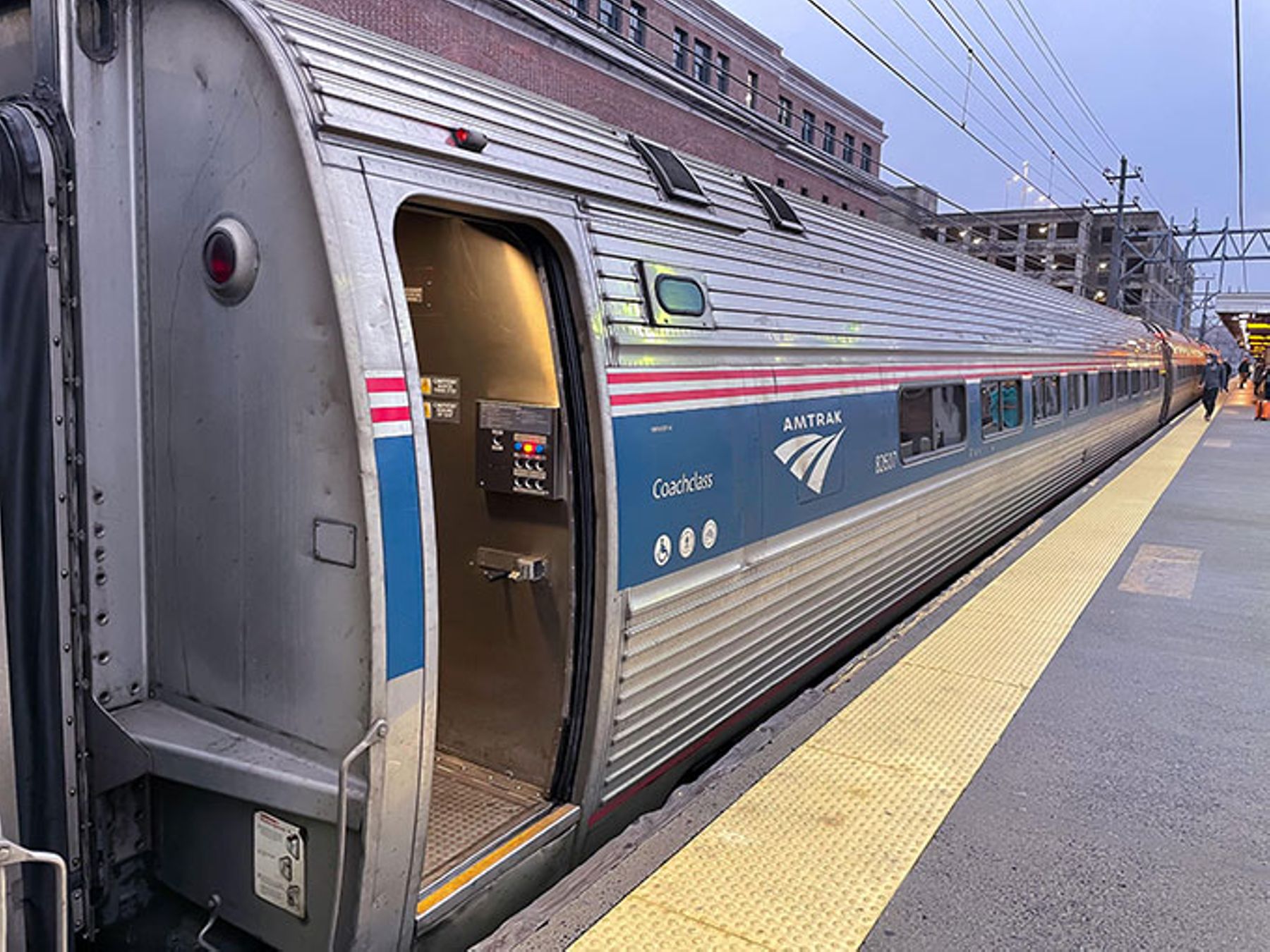
Passenger rail accounts for about 0.1 percent of travel in the United States. Yet, thanks largely to President Biden’s fixation on Amtrak, it received $66 billion—about 10 percent of all the transportation funding in the BIL. Of that, $3.5 billion went to California’s once-ambitious cross-state high-speed rail program, now reduced to a limited line between Merced and Bakersfield. This rump segment has been under construction for a decade and likely won’t be completed for another, even if the effort finds enough funds beyond the BIL to continue, which, to date, it has not. Ironically, the same program also received $3.5 billion from the Obama administration’s own infrastructure and stimulus act—and still had not finished spending that money by the time the BIL passed. The new funds had to wait in line.
The Biden administration had mixed feelings, at best, about many transportation projects—but was eager to use their funding to empower unions and expand a growing array of equity programs.
The day Biden signed the law, he issued an executive order outlining the progressive goals he hoped it would advance. He directed his administration to ensure that new infrastructure projects maintained “high labor standards,” expanded opportunities for union membership, and supported efforts to “combat the crisis of climate change.” He also instructed agencies to “invest public dollars equitably” and to “ensure equity expertise”—whatever that meant—in implementing the programs.
Soon afterward, Biden issued another executive order that demanded project-labor agreements—project-specific deals with unions—on all large construction projects directly managed by the federal government. While most state and local programs that received federal funding weren’t included in the order, the administration demanded such agreements whenever possible in awarding discretionary grants. Some estimates suggest that these union deals can raise infrastructure costs by 15 to 30 percent.
The law significantly expanded Buy America mandates for material used in infrastructure projects, and even extended them beyond basic infrastructure to government-funded buildings, driving up costs substantially. The Federal Highway Administration estimated that complying with the new rules could raise the bill for highway building by as much as $700 million annually. The Biden administration defended the program as a way to pressure companies into creating “good-paying union jobs.”
One of the oddest aspects of the BIL was that it allowed state and local transportation agencies to demand so-called local hiring preferences when issuing contracts. In a national bill funding countless state and local agencies, local hiring preferences by one would, in effect, cancel another out, with the only result being increased expenses. But the intention of the act was to hire from certain local “underserved communities,” which, the DOT said, would “increase diversity on construction projects,” especially racial diversity.
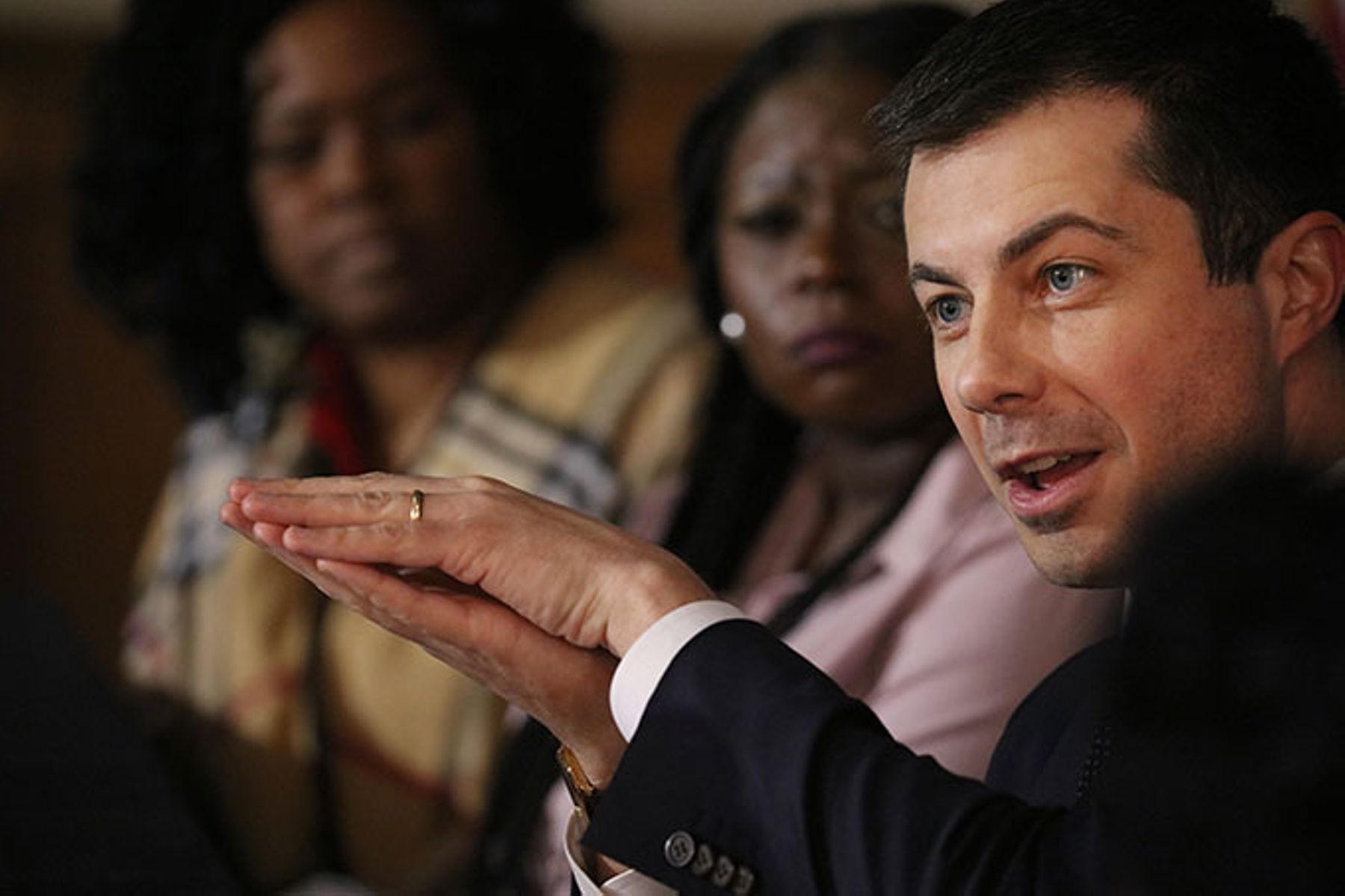
Of all the extraneous requirements that the BIL and the administration imposed on infrastructure, the racial justice mandates were perhaps the most extreme. Transportation Secretary Pete Buttigieg made racial justice a near-obsession in his time at the DOT. He talked about “racial equity in transportation at virtually every television interview,” Politico observed. Before the BIL passed, Buttigieg gave a talk on “the importance of centering equity and racial justice in infrastructure.”
As part of the department’s new Equity Action Plan, Buttigieg exhorted the DOT to implement Biden’s earlier, infelicitously named Justice40 Initiative, which aimed to direct 40 percent of the benefits from certain government investments to “disadvantaged communities” as part of a commitment to “environmental justice.” These communities were not defined in law but often served as a proxy for low-income nonwhite populations. In response, the DOT created the Equitable Transportation Community Explorer, an online tool to help the federal government and its grantees allocate more resources to such areas. This tool was separate from the DOT’s Guide on Equity Screening in the Transportation Planning Process and from the government-wide Climate and Economic Justice Screening Tool. The proliferation of such instruments prompted Minnesota to express “a desire from state DOT staff to better understand how and when to use the various screening tools.”
For decades, U.S. highway and infrastructure laws have included provisions requiring states to give at least 10 percent of all contracts to Disadvantaged Business Enterprises: firms owned by minorities and women. Buttigieg, however, pushed state and local governments getting BIL funds to sign the Equity in Infrastructure Project Pledge, committing them to expand contracting opportunities further for minority-owned firms. The Biden administration raised a similar government-wide goal for such supposedly disadvantaged firms to 15 percent of all direct federal contracts. To help meet that target, the White House celebrated the Federal Aviation Administration’s ability to award contracts of up to $10 million directly to minority businesses, which would not face the indignity of competing for them.
The BIL’s final section formally established the Minority Business Development Agency, which had previously existed only by executive order. The agency was tasked with helping minority-owned businesses secure government contracts. The BIL authorized $550 million in grants to support the agency. Buttigieg’s DOT got $50 million directly to help “minority businesses . . . compete, on an equal basis, for contracts and subcontracts.” How providing tens of millions in additional funding to one group would promote equality was left unexplained.
As David Ditch showed in a Heritage Foundation report, the Biden administration embedded racial equity mandates in nearly every major infrastructure initiative, from the port infrastructure program to the passenger ferry grant. These requirements came on top of environmental justice rules, Buy America mandates, hiring preferences, and project labor agreements—all of which have delayed or indefinitely stalled some projects.
Instead of focusing on a few core transportation projects, the BIL was decorated like a Christmas tree with every progressive ornament that could be imagined. According to the White House’s count, the law included more than 350 different programs. Many were far afield from traditional transportation.
In his speech at the 2024 Democratic National Convention, Biden highlighted the law’s $43 billion Broadband Equity, Access, and Deployment Program, which was supposed to connect disadvantaged communities to the Internet. He likened the initiative to “what Roosevelt did with electricity” and praised Vice President Kamala Harris’s work on it. Yet at the time of his speech, and even when Biden left office, not a single home had been connected, partly due to the equity and affordability mandates that the administration imposed. Another Internet equity program, the Digital Equity Act, gave over $2.5 billion to fund Internet connections for the “disadvantaged,” defined as including racial minorities and the incarcerated.
The BIL also allocated $14 billion to the Affordable Connectivity Program, which provided up to $100 for individuals to purchase laptops or phones and $30 a month to subsidize broadband service. This wasn’t even plausibly infrastructure; it was just income support. When the act’s money started dwindling, phone and Internet companies lobbied to extend the program. The government claimed that many workers could lose their remote jobs if the subsidies stopped. When funding finally ran out in May 2024, no reports of mass job losses ensued.
If there was a core progressive aim behind the BIL, it was combating climate change. Even programs that appeared to focus on transportation were redirected to reducing greenhouse gas emissions. The Airport Improvement Program, for example, was billed as a way to make flying friendly again. But the Biden administration announced that it would use seven criteria to evaluate the merits of potential projects. Four targeted environmental goals: reducing climate risks, cutting greenhouse gases, lowering fossil-fuel use, and easing environmental impacts. (One criterion was about boosting safety; two involved equity.) Philadelphia’s airport got $74 million for energy efficiency and sustainability improvements, as well as funds for “service animal relief areas” and “49 gender neutral restrooms.”
Much of the BIL went to buy more expensive and shorter-range electric versions of traditional gas-powered vehicles. It provided $5 billion to replace school buses with low- or zero-emissions models and another $5.6 billion for electric transit buses. Of course, since these new buses would need to be powered by renewable energy, the BIL funded such things as a solar canopy at the Meadowlands, New Jersey, bus garage. Another $200 million supported the development of electric passenger ferries.
Notoriously, the BIL funded $5 billion to roll out electric-vehicle chargers on U.S. roads. Just about 70 individual ports were built before the election, with the rollout slowed by the Justice40 Initiative, unionization, and other mandates. Stalling things further were new mandates on disabled accessibility for electric chargers, which the government estimated could cost nearly $1 billion over seven years. Here, as elsewhere, the government was providing more grants, only to have the new mandates that it imposed eat up the extra costs.
Though far removed from core infrastructure, the BIL provided money to companies manufacturing the batteries that would power these newly electrified cars, buses, and ferries. Billions went to the Department of Energy to support battery production and recycling. In characteristic Biden administration fashion, most of a webinar explaining how to apply for one such battery grant concerned how companies should craft a “Community Benefits Plan,” which involved compliance with Justice40 and mandates on diversity, equity, inclusion, and accessibility, along with demonstrating a “commitment to negotiate Collective Bargaining Agreements” with unions.
The Department of Energy had not been a significant part of previous transportation bills, but in this one, it got about $70 billion—nearly as much as transit. The money went to projects such as “Clean Direct Air Capture Hubs,” “Carbon Storage,” “Carbon Capture,” and “Carbon Utilization.” One of the largest programs aimed to establish green hydrogen manufacturing hubs, with hydrogen supposedly serving as the basis for new clean energy fuel. Yet producing hydrogen requires more energy than the fuel ultimately provides—nearly half the energy can be lost in production and storage—and some environmentalists think that hydrogen could worsen global warming. Even if the BIL somehow succeeded in creating a new green hydrogen economy, it would undercut the electric-vehicle economy that the rest of the act was busy funding.
The year after the BIL became law, a poll found that less than a fourth of voters even knew that it had passed. Looking around today, they would still see little indication that it did. Despite the splurge in infrastructure spending, real infrastructure investment by one measure actually declined during Biden’s term because of rapidly rising construction costs—driven higher by Biden-era inflation and the myriad mandates that the government had put on building.
After the Democrats lost the 2024 election, Biden released a fact sheet marking the third anniversary of the BIL and hailing its purported accomplishments. Almost all involved sending money out—not completing projects. The announcement claimed that the bill had “provided funding” for dozens of electrical upgrades, “funded” thousands of water projects, “awarded funding” to clean waste sites, “provided funding” for thousands of buses, and “delivered funding” to ports. Yet by the White House’s own admission, less than half of the proposed grants had even been announced, let alone completed.
“Notoriously, the BIL funded $5 billion to roll out electric-vehicle chargers on U.S. roads. Just about 70 individual ports were built before the election.”
The BIL’s failure became glaring earlier this year, when air-traffic control around Newark suffered four major radio communications malfunctions, triggering controller walkouts and causing hundreds of canceled or delayed flights. New DOT Secretary Sean Duffy remarked, “The equipment that we use, much of it we can’t buy parts for new. We have to go on eBay and buy parts if one part goes down”—this, despite tens of billions in BIL spending on air travel, including $5 billion specifically earmarked for air-traffic control.
A few years ago, if you had told infrastructure experts about the unprecedented funding in the BIL, they might have assumed that America’s infrastructure problems were on the verge of being solved. But rather than focus on repairing and improving roads, bridges, and transit, the Biden administration set out to remake infrastructure in a new mold—one centered on fighting climate change and advancing economic equity. As with the Inflation Reduction Act (see “Biden’s Worst Law,” Spring 2025), the result was more handouts and less building. After committing to over $1 trillion in new spending, Americans have more reason than ever to feel frustrated by the government’s management of infrastructure.
Top Photo: In January 2023, President Biden claimed that his Bipartisan Infrastructure Law would enable Ohio to build a companion structure to the Brent Spence Bridge—but to date, ground has not been broken. (Pete Marovich/The New York Times/Redux)