
When the Baltimore Sun, once among the country’s most respected big-city papers, fell into the hands of conservative television mogul David D. Smith in 2024, media elites reacted with what NPR’s David Folkenflik called “outrage and bafflement.” The Sun’s former TV and media critic predicted that Smith would “shred any journalistic integrity left” at the paper. Josh Tyrangiel, a former HBO and Bloomberg media executive who sits on the board of the rival startup Baltimore Banner, dubbed Smith “The Grim Reaper” and told the New York Times that the paper “is in for a miserable, undignified death.”
Two years on, the predicted apocalypse has not arrived. Smith—still capable of stirring controversy, as when his Sinclair Broadcast Group pushed to sideline Jimmy Kimmel last year—has not unleashed the ideological tsunami that many foresaw at the Sun. Instead, the paper has edged away from its more conspicuous liberal posturing, strengthened its crime coverage, and steered toward the political center. At a bleak moment for the news business, its leadership is wagering that a return to moderation offers a path to survival.
Finally, a reason to check your email.
Sign up for our free newsletter today.
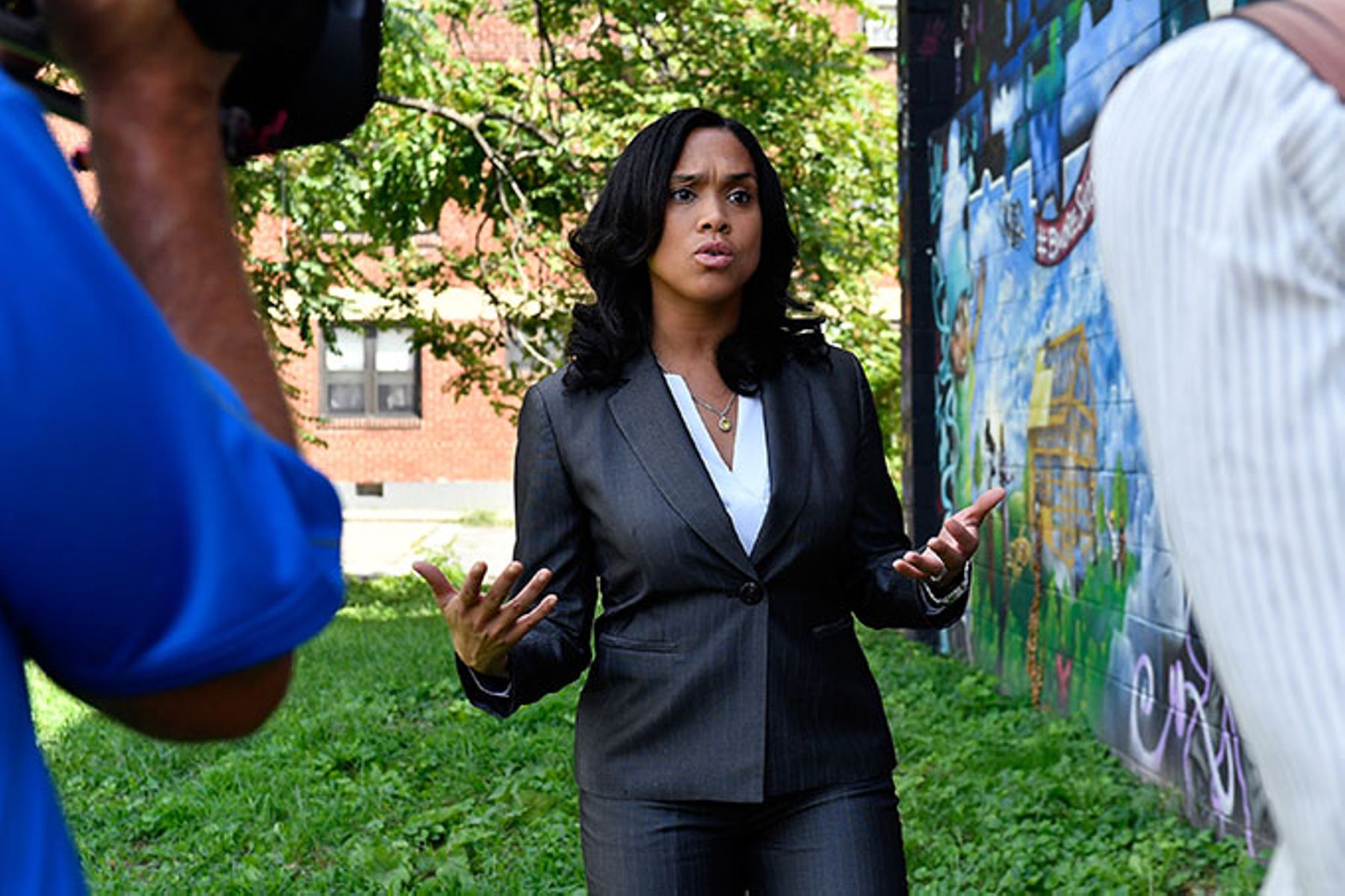
The story begins in 2014, when the city elected Marilyn Mosby as state’s attorney. Soon after she took office, Baltimore politics was upended by the death of Freddie Gray, a black man who died after suffering a “rough ride” in a police van following his arrest for knife possession. The ensuing riots, officer arrests, and a U.S. Department of Justice investigation put the progressive prosecutor at war with the city’s police force and set the city’s crime-fighting efforts on a course of retrenchment.
Homicides in Baltimore climbed by more than 60 percent in 2015, Mosby’s first year, to 344—the highest total since the grim crime epidemic of the early 1990s. Things didn’t improve in the ensuing years. Community policing and engagement with gangs failed to lower per-capita murder rates, which stayed at levels roughly ten times the average for other U.S. cities.
As Baltimore reeled, the city’s flagship newspaper had sunk to one of the weakest points in its nearly 200-year history. At its peak, the Baltimore Sun employed 423 newsroom staff, with correspondents stationed around the globe. By the mid-2010s, however, the paper’s circulation, like that of many dailies battered by the digital shift, had collapsed. Its newsroom had dwindled to roughly 80 employees, thinned further under the ownership of Tribune Media in Chicago. “It was hard not to see the city’s post–April 2015 unraveling—the surge in violence, the sprawling corruption at the police department and city hall, the general sense that there was nobody in charge—as being connected, at some level, to the fact that local media’s capacity to vet candidates and hold officials accountable had been so reduced by deep corporate cutbacks,” said Alec MacGillis, a ProPublica writer and former Sun reporter.
The Sun was no longer the robust paper the city needed. And as Baltimore fell deeper into civic chaos, the Sun embraced hard-left ideological commitments. In 2019, it even endorsed reparations, with an editorial asserting that it was time that America “atoned for racism.” That year, homicides stood at 348, a rate of 58 per 100,000 residents, second-highest in the nation.
In 2021, the Sun hailed Mosby’s policy of eliminating prosecutions for low-level crimes, saying that she “deserved to crow a bit.” Yet the homicide number reached 337, essentially unchanged. Just three months after that congratulatory editorial, Mosby was indicted on charges of perjury and misusing pandemic funds.
The repeated failures of Baltimore’s efforts to reduce violence with decriminalization and community engagement did nothing to tame the Sun’s progressive zeal. In 2022, the paper published a long apology for its history of racism, promising to do better. It praised Mosby’s gun-violence reduction program and drew plaudits from journalism organizations for ensuring that its crime coverage was “free of bias.” Meantime, the city’s stubborn homicide rate still refused to budge.
Things began to change in Baltimore only after the election of a new prosecutor, Ivan Bates, who replaced Mosby (ultimately convicted of perjury) in 2023. Bates, a Democrat, is a sharp critic of de-policing and progressive antiviolence programs. The Sun reacted skeptically, highlighting studies lauding Baltimore’s Safe Streets community-intervention program—an effort to tackle crime without police and a centerpiece of Mosby’s progressive strategy. Bates ignored it, pulled the state’s attorney’s office out of the Safe Streets framework, and ended Mosby’s policy of not prosecuting low-level offenses. In Bates’s first year, Baltimore homicides fell by more than 20 percent, dipping below 300 for the first time since before the Freddie Gray riots.
Then, in early 2024, Smith purchased the newspaper from its previous owner, hedge fund Alden Global Capital, and the tone of the Sun’s crime-related content shifted noticeably. Soon after Smith sealed the deal and Bates took office, the Sun gave the prosecutor op-ed space to defend higher maximum sentences for gun violence and stricter enforcement of juvenile penalties. When the Sentencing Project, a liberal nonprofit, hammered Bates for saying that juvenile crime was out of control, he turned to the Sun to make his case. In 2024, city homicides totaled 201, the lowest number since 2014.
The news pages also adopted a new approach. Smith’s Baltimore Fox affiliate, WBFF, has long unsettled media critics with its relentless focus on crime—an unapologetic example of the “if it bleeds, it leads” ethos. The Sun has moved closer to that sensibility, with a “Spotlight on Maryland” TV–newspaper partnership that highlights stories such as police ignoring drug crimes even after mass overdoses. The paper’s reporters have covered juveniles arrested and released with no oversight, ready to commit violent crimes again. Instead of glossing over those stories, the paper asks bluntly, “How did that happen?”
Homicides have kept falling. In the first nine months of 2025, the city recorded 103 murders, putting Baltimore on pace for its lowest annual total since the mid-1960s. To attribute that dramatic decline to changes at the Sun would be an obvious stretch. Still, a city’s newspaper helps shape the climate in which sound policy can take hold. During the Mosby years, the editorial board applauded an array of crime-intervention programs promoted by leftist advocacy groups that failed to reduce the bloodshed. One wonders what the progressive Sun would have made of the enforcement revival that Bates has now set in motion.
Since purchasing the newspaper, Smith has done little to ingratiate himself with staff. At an early meeting, he said that he didn’t want the paper devoting resources to “niche LGBTQ+ stories.” “It’s not what people want,” he told me. He also brought in, as a partner and co-owner, conservative commentator Armstrong Williams, known for his ties to prominent national Republicans. Both Williams and Smith have angered the paper’s union, which expressed its outrage at Williams using the terms “biological man” and “biological woman” in his columns, as well as at “Spotlight on Maryland” stories that mention “illegal immigrants.”
Yet the new ownership has not brought the wholesale ideological takeover that critics predicted. The Sun still runs investigations into towing-company ripoffs and abuses at a junior National Guard Camp for troubled youth—the kinds of stories that bring in a broad audience, with no political slant. And while the Sun’s editorial board shifted and expanded, the newspaper remains politically ecumenical. Says Williams, “It takes all voices—every different type of background and experience—to make a paper grow, and for readers to go to us.”
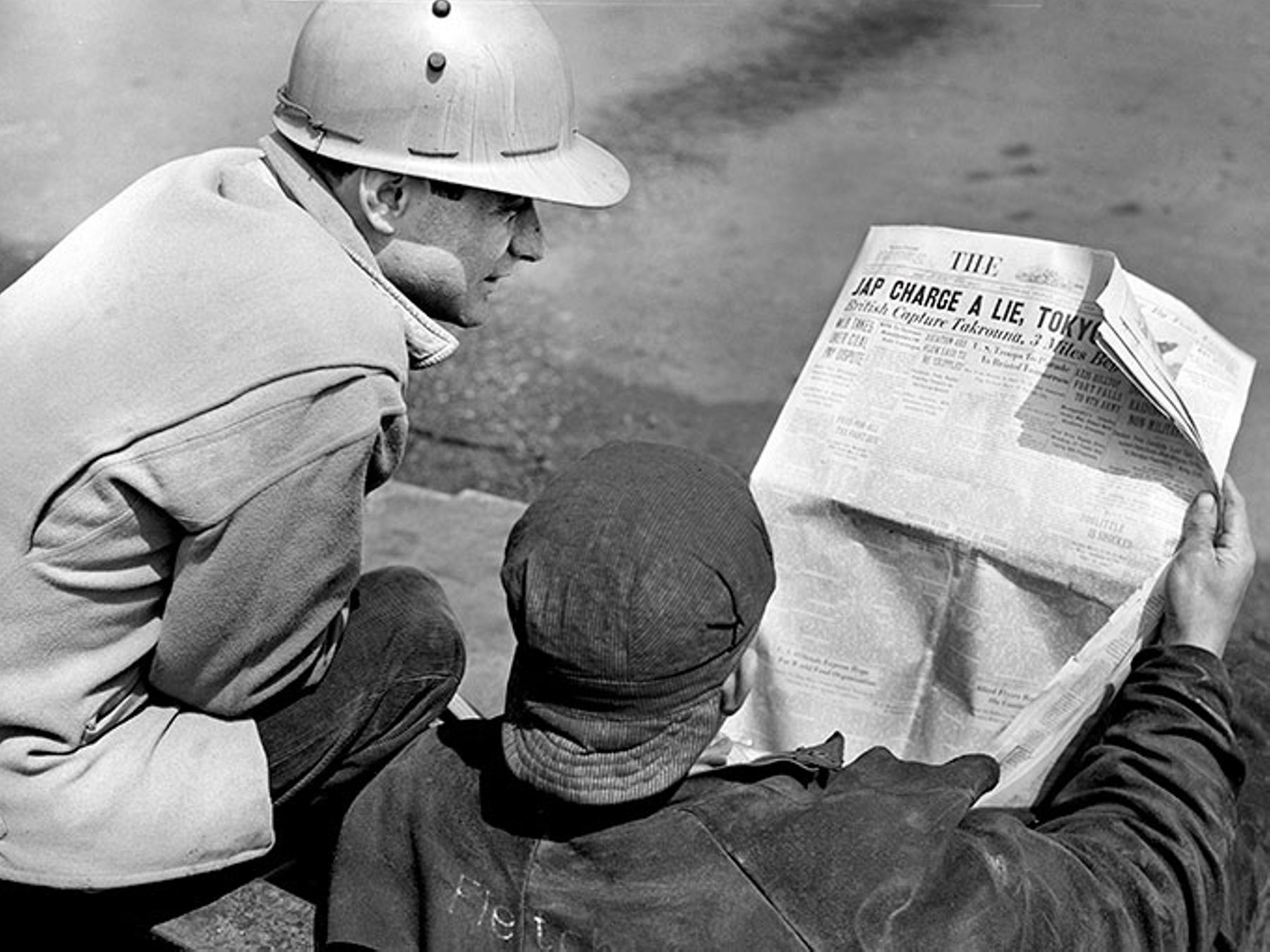
According to new information provided by the paper, management has already hired more than 40 people and is trying to recruit another 50 journalists. And it’s in the process of building new bureaus in areas of Maryland that the Sun abandoned during its decline. The paper’s management says that traffic for its coverage has increased by over 5 percent—a notable gain in a declining industry. The jury is still out on whether the Sinclair playbook will work for the printed word, however. The transformation is striking, though, considering the national trends driving local news in the opposite direction.
Smith insists that his approach is less about ideology than about priorities—what readers want and what the paper can realistically cover. Each month, he gathers a small group of Sun readers over dinner, reserving a private room and asking them: What should we be covering? The answers, he says, are consistently local: crime, education, taxes, corruption.
Still, in a punishing climate for print journalism, can the Sun truly thrive again? Smith believes that it can, and though the analogy is inexact, he points to Sinclair’s track record. He shared internal metrics comparing ratings and audience performance with national outlets like CNN and Fox News. If the numbers are accurate, they show Sinclair, focused on local news, significantly outperforming the national cable networks.
At a time when local media’s decline is widely noted, Smith is bullish—not only because local sources remain more trusted than national outlets and vital to civic life but also because he sees a potential for profit. That might not be the motivation that media critics want to hear, but many of the news moguls who built our media world had the same goal. Smith is already looking for other regional and local papers to acquire. Time will tell whether his Baltimore experiment succeeds.
Top Photo by JIM WATSON/AFP via Getty Images